

It can be easy to forget that being able to see bright night skies with naked eye is rare — and yet, in our region, it is a regular occurrence throughout most of the year. In the Queanbeyan-Palerang region, you do not have to travel far or venture deep into wilderness to experience it. Even quiet backstreets on the edge of town or rest stops just off the highway can offer surprisingly clear views of the stars.
That said, if you do want to plan something more intentional, here are three easy-access ideas for making the most of our dark skies.
Weereewa Lookout by Lake George
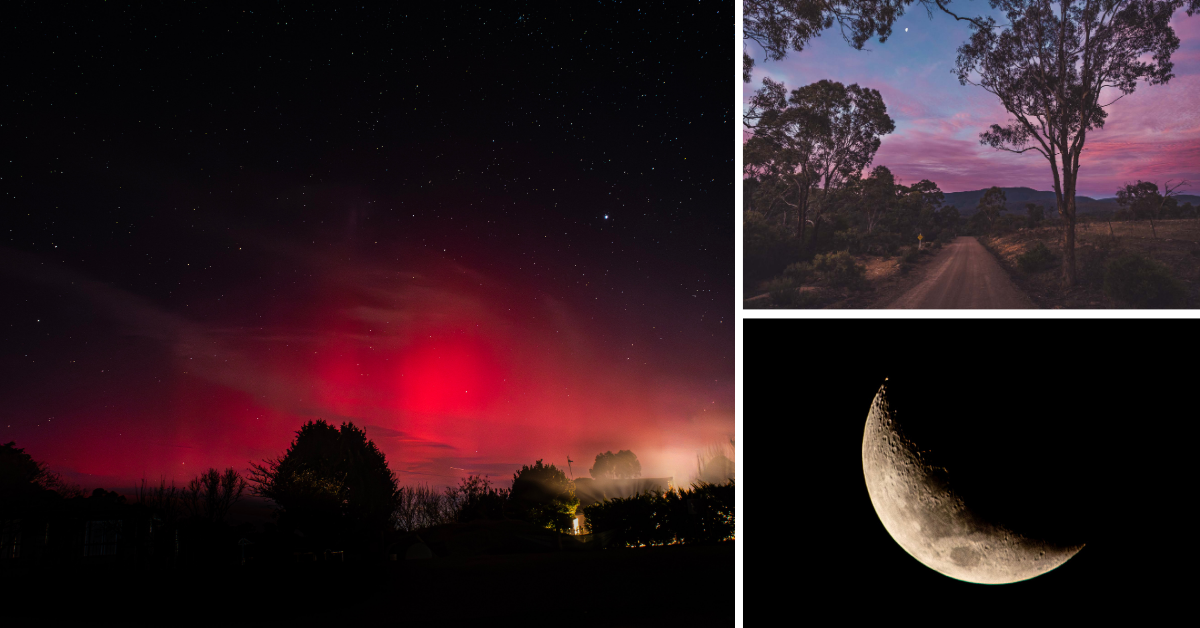
This lookout sits on the border and offers an interesting view over the enigmatic Lake George with wind farms in the distance. There have even been sightings of the aurora here! Because of its proximity to Canberra, going on a moonless night and at quiet hours with less car traffic is recommended for the best viewing conditions.
Glenburn Precinct, between Queanbeyan and Bungendore
Conveniently located along the Kings Highway between Queanbeyan and Bungendore lies the Glenburn Heritage Precinct. There is a carpark here and the clearly marked trails of the Glenburn Heritage Precinct Trail, meaning that access and navigation is easy — important, especially at night! What makes this spot great is the panoramic views over Molonglo, and across the precinct and onto the hills along the ACT/NSW border. The heritage buildings also make for fascinating foreground elements under an expansive sky.
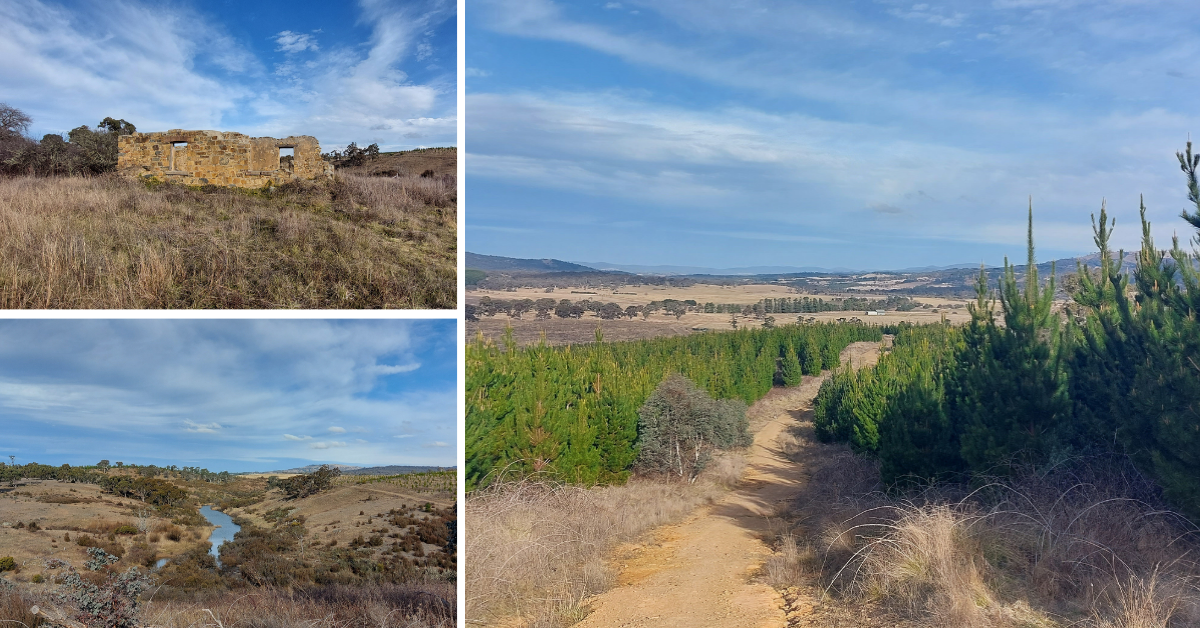 Glenburn Heritage Precinct Trail
Around Braidwood
You’ve probably driven through Braidwood during the day on the way to and from the coast but did you know it is also one of the region’s most reliable spots for stargazing and astrophotography? The town is far enough from major urban centres, at a higher elevation and is surrounded by open landscapes, making it ideal for dark sky viewing. You can reach genuinely dark viewing locations within minutes of town, making it practical for casual stargazers as well as photographers planning longer sessions.
If you want to stay overnight, consider Bedervale Tiny, a tiny house on the beautiful 450-hectare property built in 1938 by Captain John Coghill. That way, you have sweeping views literally at your doorstep. The homestead of Bedervale is heritage-listed and it is worth organising a tour to learn about its history.
Key safety and privacy considerations
- Inform someone of your plans, as you will be in a rural area at night.
- Bring a headtorch or torch, ideally with a red light setting to preserve your night vision. Dress warmly as temperatures can drop even in summer.
- Park safely and legally and ensure you are not trespassing on private property.
- Be mindful of wildlife, especially kangaroos, which are more active at night and can be difficult to see on roads.
- Check weather and moon conditions before heading out.
Astrophotography tips
While a starry night is spectacular, to capture the Milky Way’s vibrant hues of red, orange and green, you’ll need a camera (or even a recent smartphone).
The first things to set up are to place your camera on a tripod, use a wide-angle lens, and switch to manual focus and manual mode.
This is because:
- You’ll need to set up a long exposure, which means you need to keep your camera still for a clear shot. The tripod helps with this.
- A wide-angle lens capture more of the scene, including foreground elements which can help storytelling and placesetting.
- Autofocus struggles in low light so in manual focus, use live view to focus on a bright and distant star and fine-tune.
- Automatic settings will also tend to fail in low-light conditions and manual mode gives you full control.
For your manual mode settings:
- Your exposure time will be determined by a balance of factors like light pollution, the Earth’s rotation and your other settings: aperture and ISO. Generally, shorter exposures will keep stars sharp while longer exposures will create star trails
- A wider aperture will let more light into the lens, helping you capture more detail.
- High ISO will increase the camera’s sensitivity to light, making stars more visible, though it can also introduce noise if set too high.
A bonus tip is to use your camera’s built-in timer or a remote shutter release. This will help prevent camera shake caused by pressing the shutter, ensuring sharper images.
Written by Thuc Do for Visit Queanbeyan-Palerang.