

Every town has a story. Around Queanbeyan-Palerang, you don’t have to look too far to find one.
They live in heritage-lined streets and old railway stations, in former mining towns and goldfields, across museum collections and in buildings that have watched their communities change for generations.
This September, NSW History Week (5-13 September) invites us to explore the theme Keeping Stories – and there are plenty of stories worth discovering right here in Queanbeyan-Palerang.
With spring bringing longer days and a little more warmth, it’s a great excuse to hit the road, follow a heritage trail and look a little closer at the places you might otherwise drive straight through.
So pick a town, pull on your walking shoes and make a day of it.
Stories that began long before our towns
The stories of Queanbeyan-Palerang began long before its towns, roads and heritage buildings.
For tens of thousands of years, First Nations peoples have held deep connections to the lands, waterways and landscapes of this region. These are living cultures and stories that continue today, carried through community, language, connection to Country and the places around us.
As we explore the region’s more recent history, it’s important to remember that every heritage trail, town and village sits within a much older story.
Queanbeyan: look a little closer
Queanbeyan has grown and changed considerably, but traces of its past remain around almost every corner.
A great place to begin is Queanbeyan Historical Museum, housed in the town’s former Police Sergeant’s Residence, built in 1876. Inside, collections and exhibitions tell stories of the people, places and events that helped shape Queanbeyan and the surrounding district.
For those keen to learn some more of the region’s past, the recently reopened Frank Pangallo Heritage Library is home to an extensive collection of local and family history resources, preserving photographs, records and stories from across the region.
Then take the history outside. Set aside a couple of hours and follow the Queanbeyan CBD Heritage Walk, a self-guided journey through 26 locations that have helped shape the city. Starting at Farrer Place, the trail takes you beyond the busy shops, cafés and restaurants to uncover another side of Queanbeyan.
Along the way, you’ll pass the heritage-listed Queanbeyan City Council Chambers, Christ Church and some of the city’s earliest residences before crossing the Queanbeyan River via the Suspension Bridge. Continue on to historic inns and cottages, the Riverside Cemetery and Queanbeyan Railway Station, before looping back past Rusten House and other significant sites along Collett and Morisset streets.
And there’s no need to rush. Stop for coffee along the route, break for lunch in the CBD or spend some time beside the Queanbeyan River. Sometimes discovering a place you have visited before requires looking at it from a different perspective.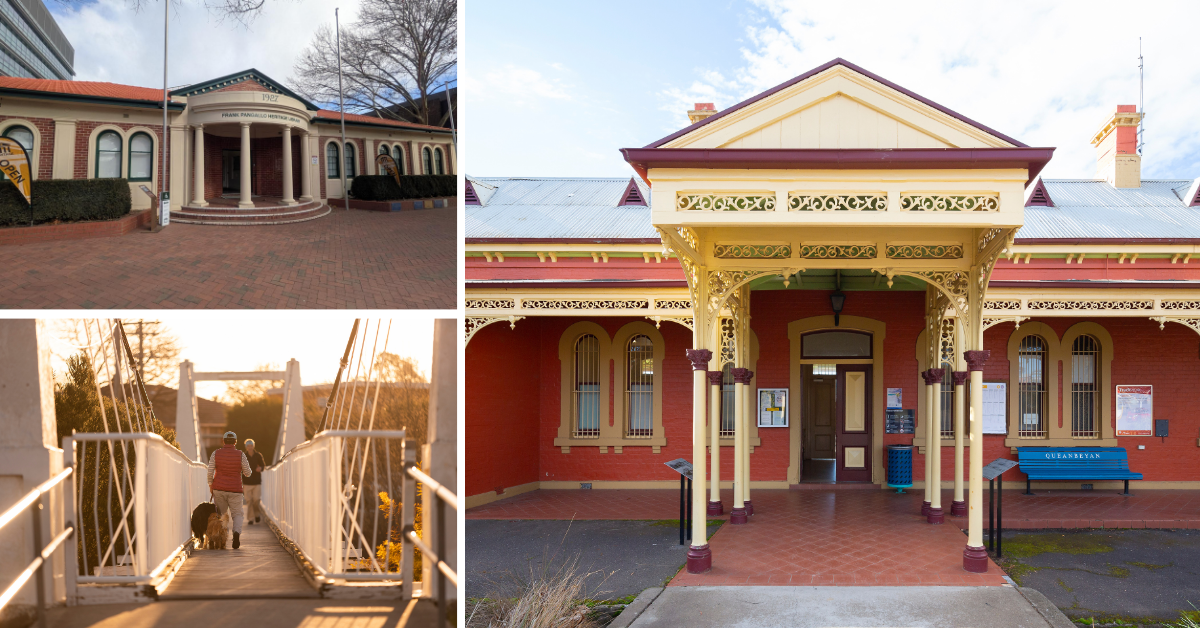
Top left: Frank Pangallo Heritage Library, bottom left: Queanbeyan suspension bridge, right: Queanbeyan train station.
Bungendore: stories along the village streets
Bungendore might be known today for its galleries, makers, food and cool-climate wine, but look beyond the shopfronts and you’ll find another side to this much-loved village.
Its historic streetscape holds reminders of Bungendore’s development as a country village and transport hub, with heritage buildings and the railway precinct helping tell the story of generations who have lived, worked and travelled through here.
Follow the Bungendore History Trail and take your time wandering between the village’s historic sites.
Then mix a little present-day into your trip.
Browse the galleries and antique stores, meet local makers, settle in for lunch or take a short drive into the surrounding countryside. It’s this mix of old and new that makes Bungendore worth exploring beyond a quick stop on the way through.
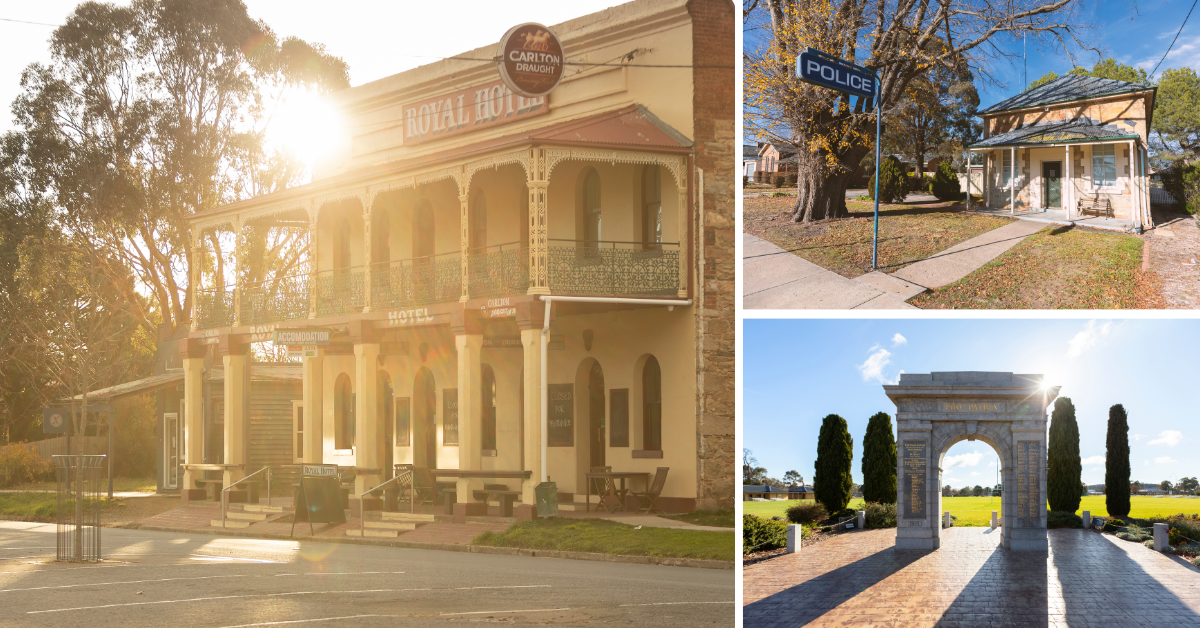
Left: The Royal Hotel Bungendore, top left: the former Bungendore Courthouse, bottom left: Bungendore War Memorial
Braidwood: a town that keeps its stories
In Braidwood, history isn’t tucked away. It’s all around you.
The entire town and its setting are recognised on the NSW State Heritage Register, making Braidwood an extraordinary place to explore on foot.
And there’s a newly refreshed reason to start at the Braidwood Museum and Heritage Centre.
Reopened in early 2026 following a significant refresh, the museum offers a window into the people, industries and events that shaped Braidwood and its surrounding district — from early settlement and the gold rush era to the stories of everyday life in the region.
As part of History Week, the town of Braidwood and the surrounding villages of Araluen, Majors Creek, Mongarlowe, Nerriga and Reidsdale are coming together to present tales of local people and places at the Braidwood Museum and Heritage Centre. Come along on Sunday 13 September from 11am to 2pm to hear the town’s history and enjoy morning tea with homemade scones, jam and cream. The presentations from history researchers and storytellers from each of the villages will start at 11:30am.
The Braidwood Heritage Walk takes you past dozens of places of interest scattered throughout town. Wander along Wallace Street, look above the shopfronts, explore the side streets and discover buildings and details that reveal just how much of Braidwood’s past remains part of the town today.
Give yourself time to explore beyond the trail, too.
Start with breakfast or coffee, browse the town’s antiques, boutiques and galleries, stop for lunch and seek out local makers and produce along the way. There’s plenty here to turn a heritage walk into an entire day — or an excuse to stay the night.
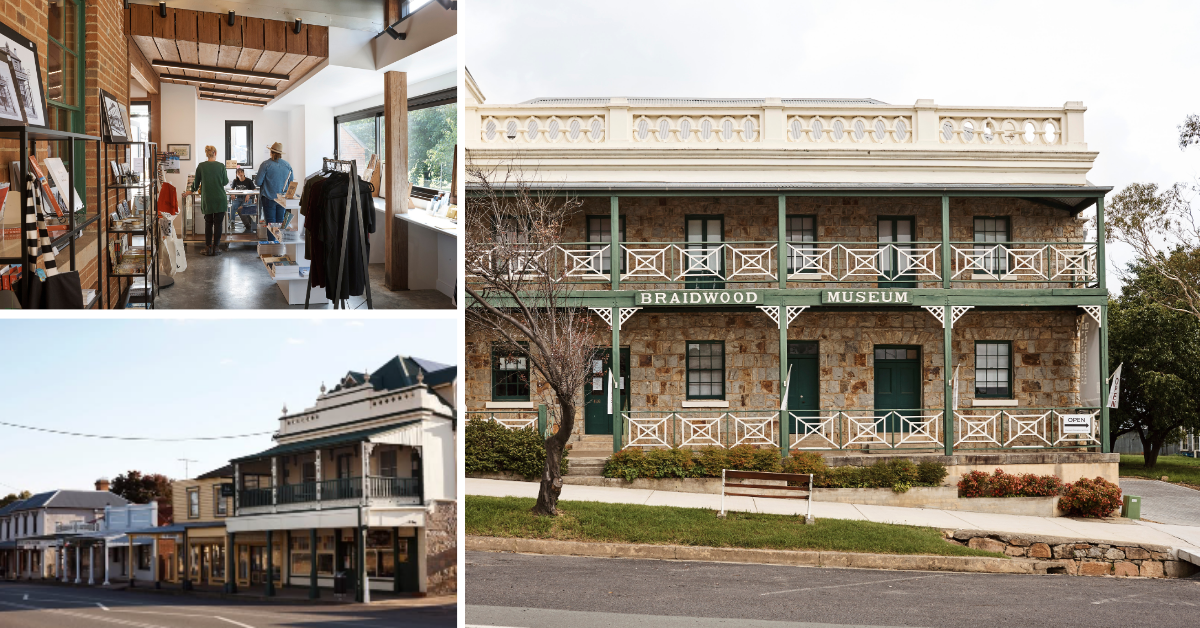
Top left: Braidwood Museum gift shop, bottom left: Braidwood town centre, right: Braidwood Museum
Beyond the main streets: stories of gold, mining and country life
Some of the region’s biggest stories can be found in its smallest communities.
Take the road beyond the major towns, and you’ll uncover landscapes shaped by gold, mining, agriculture and generations of country life.
In Captains Flat, the village’s rich mining past can still be seen in landmarks scattered throughout town. Discover historic sights including the old hospital, former post office, Miners’ Memorial, and the Police Station and Courthouse, dating back to 1896 and still bearing the crest of Queen Victoria.
Then stop by the Captains Flat Hotel, built in 1938, which when it opened boasted Australia’s longest bar at more than 30 metres -a fittingly big piece of history for this small country village.
In Araluen, the peaceful valley landscape gives few clues to the rush of activity that once unfolded here. The discovery of gold transformed the valley, drawing thousands of hopeful miners and leaving behind stories that remain part of Araluen’s identity today.
Follow the Araluen History Trail, a drive through the valley that winds past farms and bushland and connects sites that witnessed its gold rush and early settlement history. Along the way, discover old cemeteries, early 1900s churches and the stories of the pioneers who made a life in this picturesque valley.
Make the drive part of the experience. Spring is a beautiful time to explore Araluen, when the journey through the surrounding countryside is every bit as rewarding as the history waiting at your destination.
Nearby Majors Creek adds another chapter to the region’s gold rush story. The village takes its name from Major William Sandys Elrington, a retired British Army officer and early landholder in the district. Originally known as Elrington, the village became better known as Majors Creek following the discovery of gold in 1851.
While you’re there, stop at the historic Majors Creek Pub – the Elrington Hotel, where the original village name lives on, for some sustenance and a classic country pub meal before continuing your history adventure.
In Nerriga, history follows the road. The village was an important point along the historic Wool Road, built in the 19th century to create a shorter route between the tablelands and the coast at Jervis Bay.
The discovery of gold later brought another chapter to Nerriga’s story, drawing people to the district and helping the village grow. Today, its country setting and historic village character make Nerriga a worthy detour for those looking to explore another side of the region’s past.
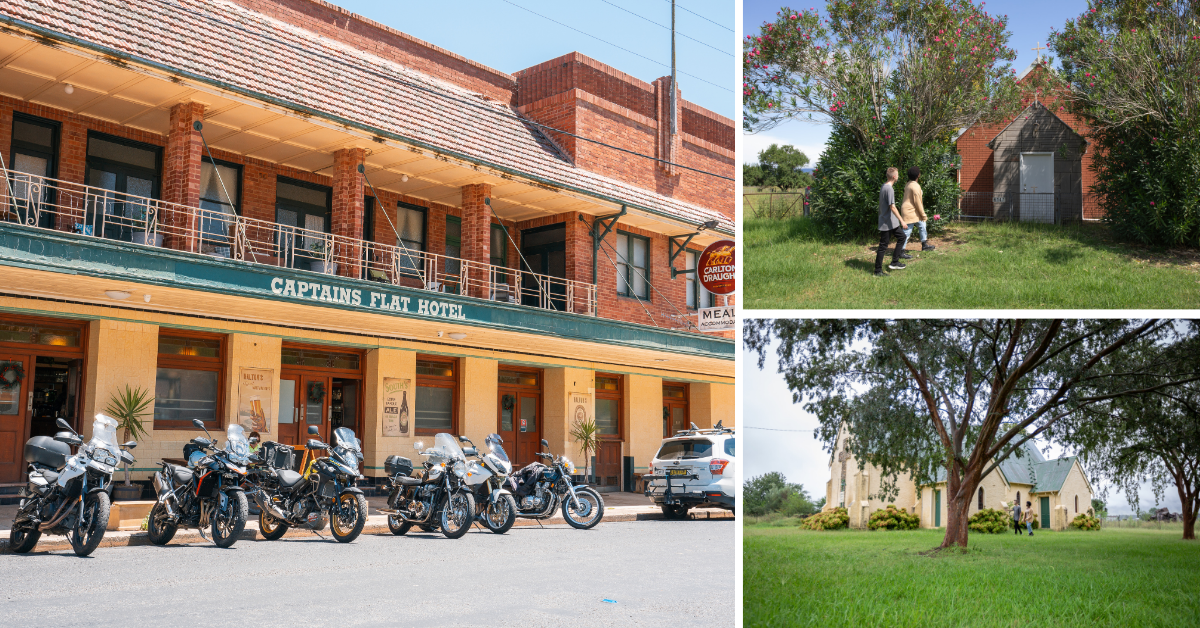
Right: Captains Flat Hotel, top left: Union Church – Araluen, St Patrick’s Church – Araluen
Keep the stories going.
History isn’t only kept in books. It lives in collections, communities, buildings and landscapes — and in the stories that continue to be shared.
This History Week, choose a town, follow a history trail and make a day of it. You might discover somewhere new or simply see somewhere familiar through a different lens.